
【Qingdao News Original】
(Reporter: Song Bohong)
Recently, the Qingdao Historic Urban Area was officially rated as a National 4A-Level Tourist Attraction. This recognition not only serves as an authoritative endorsement of the conservation and renewal efforts in the century-old district but also provides a significant boost to the integrated cultural and tourism development of "The World's Most Beautiful Bay."
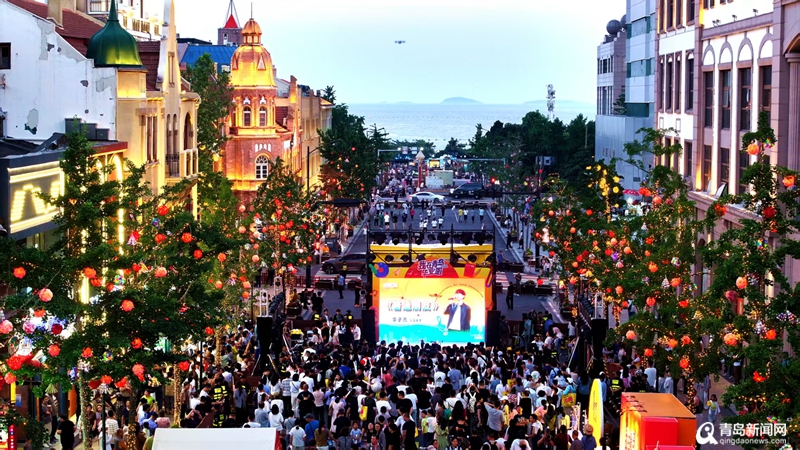
Spanning three square kilometers, this area, which carries the collective memory of Qingdao, has woven together the unique landscape of "red tiles and green trees, blue sea and azure sky" through a practice of "revitalization through careful preservation." This has forged a new model for cultural tourism, "strengthening the soul of the old town and shaping the form of the bay," and is writing a new chapter for this city of mountains and sea.
Revitalizing Cultural Heritage: Turning an Old Town's Legacy into the Cultural Foundation for Bay Tourism
As the cradle of Qingdao's urban culture, the historic area boasts the largest German-style architectural cluster and "Liyuan" (courtyard-style residential buildings) complexes in China. These world-class physical resources create a unique complementary advantage with the natural endowments of "The World's Most Beautiful Bay." Following the 4A rating, the historic area is advancing the revitalization of its cultural heritage with higher standards, transforming static historical relics into dynamic cultural and tourism experiences and cementing the cultural foundation for the bay's tourism sector.
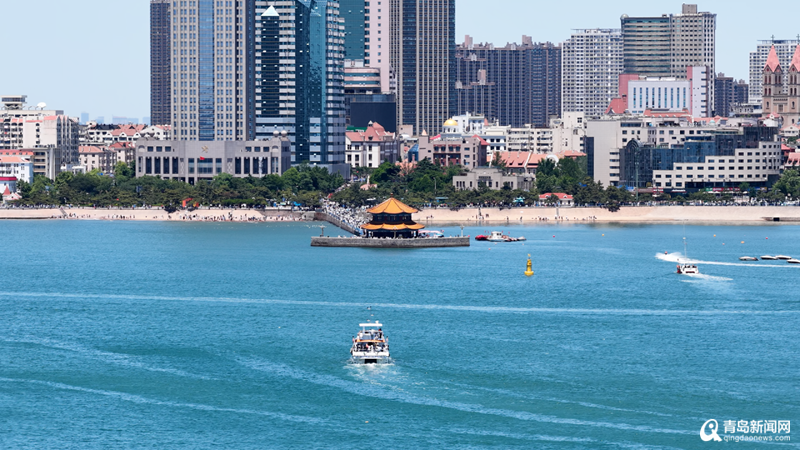
Adhering to the principles of "preserving the original appearance and minimal intervention," the city has employed 28 traditional craftsmanship techniques, such as sand washing and point shaking, to breathe new life into century-old Liyuan courtyards like Taixing Li and Sanjiang Li. Concurrently, a cluster of 17 museums and former residences of famous figures has been established, creating an immersive system where "history is readable, and streets are walkable."
In recent years, historical buildings in Qingdao's old town have been revitalized and reborn. Venues like the Zhongshan Road Urban Memory Museum and the Dabaodao Liyuan Memory Museum connect the area's port commerce and local lifestyle with the bay's maritime culture, allowing visitors to appreciate the architectural art while experiencing the urban fabric where mountains meet the sea. This cultural revitalization not only preserves the city's nostalgic charm but also elevates "The World's Most Beautiful Bay" beyond a simple sightseeing destination, enriching it with profound historical depth and cultural allure.
Integrating Business Formats to Inject Diverse Vitality into the Bay Economy
The prestigious 4A-level designation provides a high-quality platform for the integration of business formats between the old town and the bay. Breaking the boundaries of a traditional scenic area, Qingdao's historic district has deeply integrated its two major IPs, "Shangjieli" and "Dabaodao," introducing 330 diverse and trendy businesses. This has created a consumer scene that combines mountain and sea sightseeing, cultural experiences, and nightlife, forming a virtuous cycle of complementary business formats and mutual tourist flows with the bay's tourism offerings.
From the 35th Qingdao International Beer Festival's Old Town venue attracting 14.72 million domestic and international tourists, to the Radish, Yuanxiao, and Tangqiu Fair drawing 4.621 million visitors, the historic area has activated consumption across the region through festive events. After experiencing the local life in Liyuan courtyards and the century-old commercial heritage, tourists can seamlessly connect to the bay's coastal resorts and maritime sightseeing tours. The thriving night-time economy further enhances the synergy between the bay and the city. Music bars and boutique guesthouses in the northern Dabaodao area complement the bay's dazzling nightscape, shaping an "all-day" tourism model of "Day-trips to the bay, night tours in the old town" and injecting sustainable vitality into the bay's cultural tourism economy.
Fostering Regional Linkages to Build a New Symbiotic Development Model for the Bay and the City
The successful creation of the 4A-level scenic area in Qingdao's old town is more than just an upgrade; it is a strategic breakthrough that will catalyze the comprehensive integration of culture and tourism across "The World's Most Beautiful Bay." Through infrastructure upgrades and an improved service system, the historic area and the bay have formed a development community featuring interconnected transport, shared resources, and joint brand building, transitioning cultural tourism from "isolated highlights" to "regional brilliance."
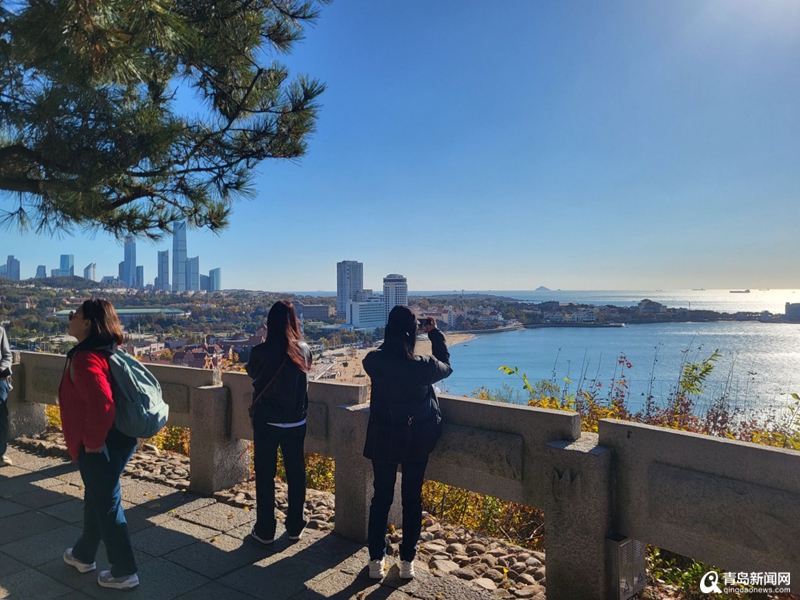
The old town has significantly optimized its transport connections and visitor experience with the bay's scenic spots by renovating 55 roads, adding 2,106 parking spaces, and increasing the coverage of public service facilities to 90%. As a core venue for the "2024-2025 SCO Capital of Tourism and Culture," the historic area collaborates with other key bay locations like the Olympic Sailing Center and Laoshan Mountain to launch premium tour routes featuring "Historic District + Coastal Scenery." In the first half of the year, these routes attracted nearly 240,000 foreign visitors entering through the city's airport. This regional linkage not only amplifies the international influence of "The World's Most Beautiful Bay" but also uses cultural tourism as a bond to promote coordinated development between the old town and the bay in urban renewal, industrial upgrading, and international exchange, setting a benchmark for the integration of cultural and tourism in a city of mountains and sea.
From a traditional residential area to a 4A-level scenic attraction, the magnificent transformation of Qingdao's old town offers a vivid model for the cultural and tourism integration of "The World's Most Beautiful Bay." In the future, with the continuous deepening of refined and smart management, this century-old district is destined to thrive in symbiosis with the blue sea and sky, allowing historical context and maritime vitality to shine together, and blossoming with even more captivating glamour on its journey to becoming an international tourist destination.
Editor: Yuan Ruichen


