
【Original from Qingdao News】 (By Reporter Song Bohong)
Recently, "The Romance of the Silk Road," a major project jointly developed by the city of Qingdao and Songcheng Performance Development, has begun to take shape. With the unveiling of the giant "Goddess of the Silk Road" statue, this highly anticipated cultural tourism project in Qingdao marks its latest milestone. On the shores of Jiaozhou Bay, a brand-new cultural tourism landmark is on the rise.
According to reports, the Qingdao Romance of the Silk Road project, with a total construction area of 49,000 square meters, is set to be unveiled this July by Ruyi Lake in the SCO Demonstration Area. As a flagship cultural tourism project for the SCO Demonstration Area, this comprehensive destination integrates multiple formats including a grand theater, themed streets, an international street, and an intangible cultural heritage town. It not only fills the gap for high-end cultural tourism complexes in the region but will also serve as a powerful engine, with culture as its bond and industry as its support, to bolster Qingdao's development into an international coastal tourism destination and deepen cultural exchanges among Shanghai Cooperation Organisation (SCO) member states.
Forging a New Bridge for Mutual Learning Among SCO Civilizations
As the SCO Capital of Tourism and Culture for 2024-2025, Qingdao is in urgent need of tangible cultural carriers to convey its urban charm and national role. The Romance of the Silk Road project precisely targets this demand by deeply integrating Qilu culture, Maritime Silk Road culture, and SCO elements, creating a platform for cross-temporal civilizational dialogue through artistic expression.
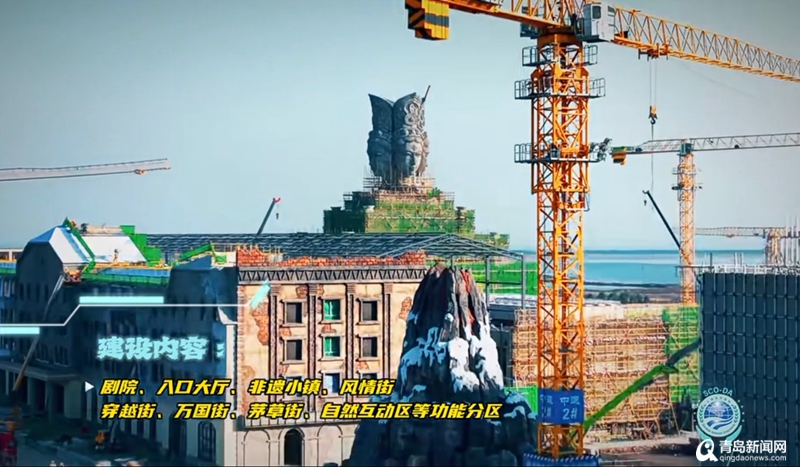
Unlike the singular-focus displays of traditional cultural tourism projects, its core performance will leverage Songcheng Performance's mature creative expertise. Through grand narratives and cutting-edge stage technology, it will weave together the historical richness of the Qilu region with the diverse cultures of SCO countries, allowing visitors to experience the fusion and coexistence of Silk Road civilizations in an immersive setting.
The project's Intangible Cultural Heritage Town and International Street will further serve as dynamic windows for cultural dissemination. Here, visitors can explore the legacy of Shandong's intangible cultural heritage while also encountering the unique folk customs, cuisines, and arts of SCO member countries, upgrading the experience from "cultural display" to "shared co-existence." In the long run, this site is poised to become a new icon for cultural and tourism exchanges among SCO nations, highlighting Qingdao's unique hub value in advancing China's cultural soft power.
Empowering Industry, Igniting a New Engine for Regional Economic Growth
For Jiaozhou, a district known for its manufacturing industry, the opening of The Romance of the Silk Road will fundamentally change the local landscape, which has lacked a "flagship" cultural tourism product. It will drive the industrial structure towards a diversified "Culture + Tourism" model. The project's comprehensive business chain, covering performance, shopping, dining, and entertainment, will directly create a substantial number of jobs. Simultaneously, through a model where "a major project drives smaller industries," it will stimulate the development of supporting sectors in surrounding villages, such as homestays and agricultural product processing, forming a cultural tourism economic radiation circle and replicating the success of the Lushan Scenic Area in promoting rural revitalization.
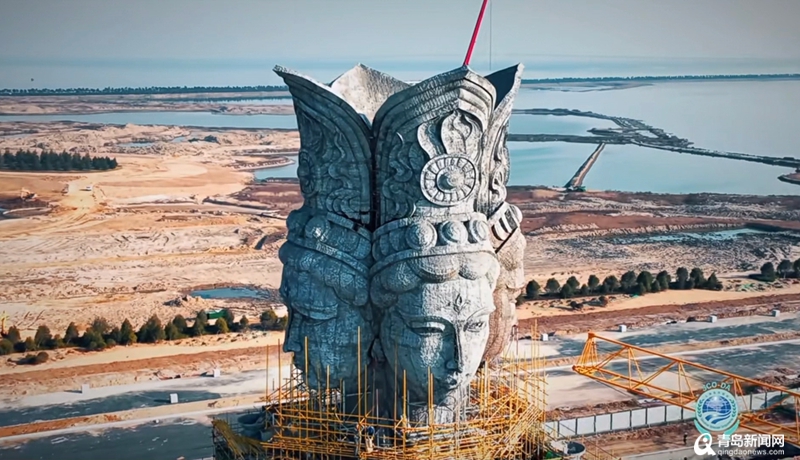
From the perspective of the city's overall cultural tourism layout, the project will form a tourism matrix on the north shore of Jiaozhou Bay, alongside other attractions like the Oriental Eden and Misty Mountain. This will help address Qingdao's challenges of "seasonal dependency" and "uneven regional distribution" in its tourism sector. Its strategic location, just a 30-minute drive from Jiaodong Airport and a 10-minute drive from the Jiaozhou Bay Bridge, allows it to both alleviate tourism pressure on the downtown area and attract domestic and international transit passengers to stay and spend, facilitating Qingdao's transformation from "transit tourism" to "in-depth tourism." The resulting influx of visitors will further drive an upgrade in tourism consumption, cultivating a new economic growth point for Qingdao.
Elevating Stature, Shaping a New Identity for an Open City
The development of the SCO Demonstration Area is a significant national mission entrusted to Qingdao, and The Romance of the Silk Road is a vivid embodiment of this mission in the cultural tourism sector. With the "Silk Road" as its spiritual bond, the project showcases the cultural characteristics of SCO member states and countries participating in the Belt and Road Initiative (BRI). It will synergize with other local landmarks like the SCO Pearl International Expo Center to further enhance the open-ended functions of the SCO Demonstration Area and elevate its international standing. In the future, it may serve as a cultural support venue for major events such as the SCO International Investment and Trade Expo, fostering a resonance between economic exchange and people-to-people learning.
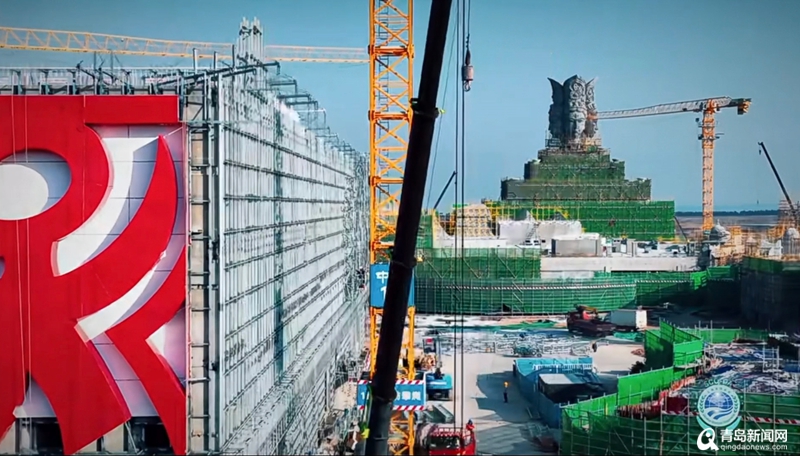
Today, the unique positioning of The Romance of the Silk Road provides Qingdao with a strategic advantage for differentiated development. It is more than just a tourism project; it is a "soft power IP" for Qingdao to compete on the global stage. It will help Qingdao forge a unique brand identity combining "mountain-and-sea scenery + SCO culture + modern experiences" in its journey to become an international coastal tourism destination. As the ancient Silk Road civilization and a modern spirit of openness converge here, Qingdao is set to command the international stage of cultural and tourism exchange with a more distinct image.
From a construction site to a new cultural tourism landmark, the rise of The Romance of the Silk Road epitomizes Qingdao's high-quality development driven by the integration of culture and tourism. Its opening in July signifies not just the launch of a project, but a new starting point for Qingdao to deepen its cultural foundations and expand its horizons of openness. It is believed that as the project operates, this cultural landmark, linking past and future, East and West, will write an even more brilliant chapter of openness for Qingdao.
Editor: Yuan Ruichen


