
Redefining the underlying architecture of computing power and electricity, this innovation sets a new paradigm for power supply at next-generation computing hubs.
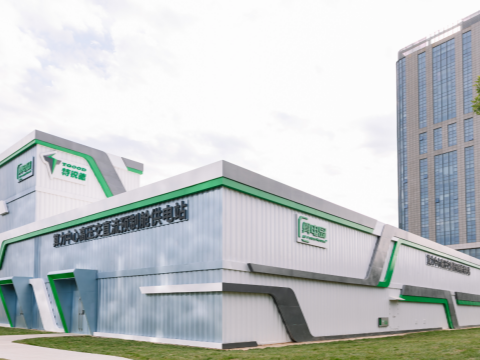
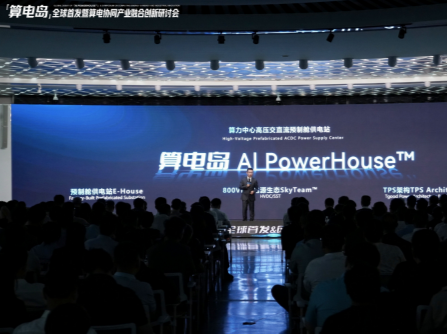
Against the explosive surge in AI computing demand, power infrastructure is in urgent need of transformative upgrades. On the 6th, TGOOD, China’s first ChiNext-listed firm, unveiled Compute-Power Island, the world’s first high-voltage AC/DC prefabricated cabin power station tailor-made for computing centers. The product revolutionizes traditional power supply models for data centers and restructures the underlying electrical architecture and construction mode of computing hubs, unlocking power bottlenecks amid the computing boom.
(From: Xinhua)
Soaring demand for training and inference of large AI models has imposed unprecedented pressure on power supply for computing facilities. Latest data from the International Energy Agency (IEA) shows global data centers consumed 485 billion kWh of electricity in 2025, a 17% year-on-year increase accounting for 1.5% of global power consumption. Meanwhile, China’s national computing hubs used 196 billion kWh, rising 18.1% year-on-year to take up 1.9% of the country’s total electricity use. Forecasts indicate China’s computing power consumption will hit 500–700 billion kWh by 2030, making up over 5% of national power use, with more than one-third of newly added electricity demand generated by the computing sector. Global players are racing to develop power solutions for next-gen AI data centers, with NVIDIA’s 800 VDC power architecture as a representative solution.
Compute-Power Island is engineered to address the unique power needs of modern computing hubs. Unlike conventional substations, it is an integrated prefabricated cabin station that directly receives 110kV or 220kV high-voltage power, processes it via high-voltage solid-state equipment and DC busbars, and delivers 800 VDC straight to server rooms. All 167 functional modules covering high-voltage, medium-voltage and DC power distribution are prefabricated and fully tested in factories before delivery. On-site construction volume is cut by 70% and installation workload reduced by 80%, with full delivery completed in merely 150 days, compared to 12–18 months required for traditional civil-built substations.
Its core breakthrough lies in compute-power synergy. Traditional data centers operate energy and computing systems in isolation with rigid power delivery regardless of renewable power availability or computing task priorities. Drawing on TELD’s technical reserves in ordered charging, vehicle-grid integration, microgrids and virtual power plant digital control platforms, TGOOD built a dedicated AI platform for compute-power synergy for Compute-Power Island. Supported by three core intelligent agents for renewable power forecasting, energy storage fluctuation mitigation and AI power flow optimization, the system achieves millisecond-level sensing of wind and solar output, grid load and energy storage capacity, then automatically distributes loads and performs flexible regulation based on task priorities.
(From: Xinhua)
When renewable power output surges, the system prioritizes flexible workloads such as data cleansing and model pre-training to maximize renewable absorption. During grid peak hours or volatile renewable generation, non-critical tasks are intelligently scaled back, while energy storage and supercapacitors jointly stabilize DC bus power supply. Calculations show that combined optimizations including direct renewable power access, peak-load shifting via energy storage, power consumption cuts driven by compute-power synergy and intelligent operation can slash power cost per token by 30%. Furthermore, wind and photovoltaic power can be directly connected to the 800 VDC busbar, eliminating losses from multi-stage AC-DC conversion and enabling 100% efficient local consumption of renewables.
Backed by TGOOD’s decades-long expertise in electrical equipment, Compute-Power Island forms a complete closed loop covering high-voltage grid access, direct high-voltage DC power supply, full renewable energy absorption, intelligent energy storage dispatching, in-depth compute-power coordination and full-lifecycle intelligent operation and maintenance. It fully adapts to liquid-cooled high-density computing and future full-scenario zero-carbon supercomputing clusters, delivering replicable, large-scale, secure, efficient and low-cost domestically-developed power infrastructure for national computing hubs under the "East Data, West Computing" Project, empowering China’s AI computing industry to break through energy constraints.
Editor: Sun Xin/ WangYulin


