
The Xinhua-Baltic International Shipping Centre Development Index (ISCDI) Report 2026 was released on July 10 at the launching ceremony of China Maritime Day themed event in Shanghai. According to the latest index results, Shanghai surpassed London for the first time, rising to second place globally in overall strength and reshaping the top-three ranking pattern that had remained unchanged for six years. Qingdao moved up one place from its 2025 ranking, overtaking Houston, the United States, to rank 12th worldwide and continuing to lead the northern port cluster.
The report noted that the global shipping centre landscape experienced significant changes in 2026 compared with previous years, with 14 of the world’s top 20 shipping centres changing positions. Among them, Chinese shipping centres demonstrated particularly strong performance, with Shanghai, Ningbo-Zhoushan, Guangzhou, Qingdao and Tianjin each improving by one position. European shipping centres saw weaker performance in this edition, while shipping centres in the Americas experienced mixed results. The East Asian shipping landscape also underwent major adjustments.
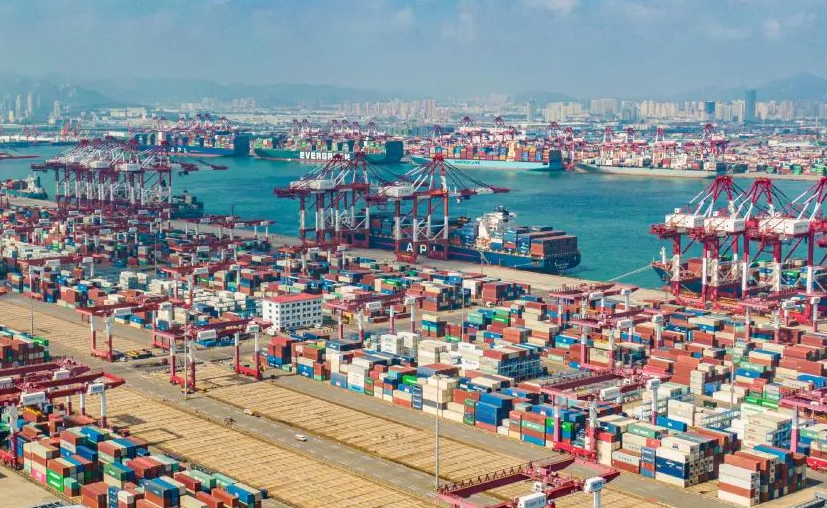
Regarding Qingdao specifically, the report highlighted the continued growth of Shandong Port Qingdao Port’s dual capabilities in cargo and container operations in 2025. The port handled more than 740 million tonnes of cargo throughout the year, while container throughput reached 32.89 million TEUs, increasing by more than 6 percent year on year and placing Qingdao among the world’s top five busiest container ports. Iron ore import operations remain one of Qingdao Port’s core competitive advantages. In 2025, the port’s newly completed 400,000-ton ore terminal officially began operations, making Qingdao the first port in China to operate a 400,000-ton dry bulk smart terminal and the first in northern China equipped with two 400,000-ton ore terminal facilities. The new terminal will increase Qingdao Port’s annual ore handling capacity to 56 million tonnes, playing a key role in securing domestic mineral resources and energy supplies. Meanwhile, Qingdao Port continues to expand its international logistics network, with nearly 240 shipping routes connecting more than 700 ports across over 180 countries and regions.
The report also pointed out that Qingdao has continuously broken port throughput records through the application of automation technologies. In 2025, the average operating efficiency of quay cranes at Qingdao Port’s automated terminal reached 62.62 natural containers per hour per crane, marking the 13th time the terminal has set a new world record for automated port handling efficiency. Qingdao Port has also installed and deployed China’s first commercial vacuum-based automated mooring system. With 13 mooring units installed along the berth, the system can automatically and precisely secure large container vessels exceeding 200 metres in length. It reduces the mooring operation time for a single vessel from the traditional 20–30 minutes to less than 30 seconds, achieving a major efficiency leap from manual operations to intelligent automation. In terms of green and sustainable development, Qingdao has also delivered notable achievements. Qingdao Port announced cooperation with Germany’s Port of Hamburg and Wilhelmshaven to jointly develop a green shipping corridor. The port has also introduced China’s first hydrogen-electric tugboat, meeting the operational requirements of modern port vessels while further reducing carbon emissions.
As one of the most influential evaluation systems in the global shipping sector, the Xinhua-Baltic International Shipping Centre Development Index is jointly compiled by China Economic Information Service and Baltic Exchange and has been released for 13 consecutive years. This year, the index evaluated 43 international shipping centre cities worldwide across three dimensions: port factors, maritime business services and general environment. The report stated that global trade systems are undergoing profound adjustments, while a new wave of technological innovation is accelerating. The international shipping industry is entering a new phase of development opportunities while facing increasingly complex challenges. Shipping centres in the Asia-Pacific region continue to demonstrate strong resilience, while emerging economy shipping centres are becoming important drivers in improving the global allocation of shipping resources.
Editor: Li Xunxiang/ Wang Yulin


