
The 2026 China-EU Entrepreneurs Qingdao Forum opened on October 27, gathering around 300 distinguished guests from political, business and academic circles worldwide. Centered on “synergistic innovation and high‑quality development among central and local SOEs, private firms and foreign enterprises”, the forum sought ways to build a resilient, open and modern industrial system amid global industrial restructuring, technological innovation and the drive for green transition.
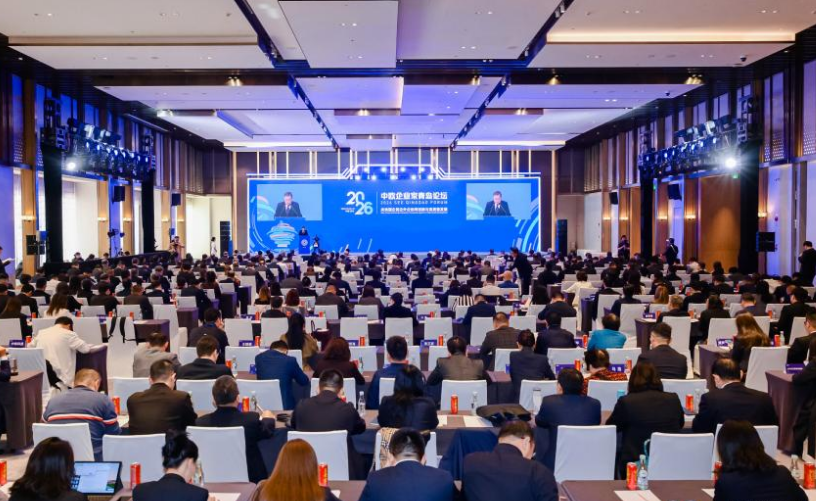
China and the EU are major trading partners, with bilateral economic and trade cooperation expanding into the digital economy, low‑carbon development and green finance. Qingdao has registered robust trade with Europe: its imports and exports with European countries hit 153.7 billion yuan in the first three quarters, rising 8.1% year on year. Leading European corporations have kept expanding their footprint in the city by setting up R&D hubs and regional headquarters, while Nestlé and AstraZeneca have announced major new investment plans. New cooperation platforms including the Qingdao Chapter of the European Union Chamber of Commerce in China and the China‑EU Sci‑Tech Innovation Centre under the China Foreign Entrepreneurs Federation have also been launched.
Speakers agreed that state‑owned enterprises, private businesses and foreign investors can jointly generate “1+1+1>3” synergies by combining SOEs’ industrial and capital strengths, private firms’ agility and foreign enterprises’ access to international technology, distribution networks and standards. Such collaboration helps mitigate headwinds such as rising compliance costs and market uncertainties brought by trade protectionism. Participants proposed forming innovation consortia to facilitate two‑way flows of technology, capital and market access, especially around shared priorities including green transition, ESG and carbon footprint accounting, to jointly tap third‑party markets.
The forum also discussed internationalization strategies for Qingdao enterprises. Guests suggested nurturing industrial clusters domestically in priority sectors such as next‑generation IT, AI and advanced manufacturing before replicating proven models overseas, turning EU regulatory and ESG requirements into long‑term competitive strengths. Leveraging Shandong Port, China‑Europe Railway Express hubs, the Qingdao FTZ and provincial resources, the city will translate its logistics connectivity into comprehensive international services to support local firms’ global expansion.
Editor: Ding Qianqian/ Wang Yulin


